

LARGE-SCALE REFORESTATION IN THE WET TROPICS
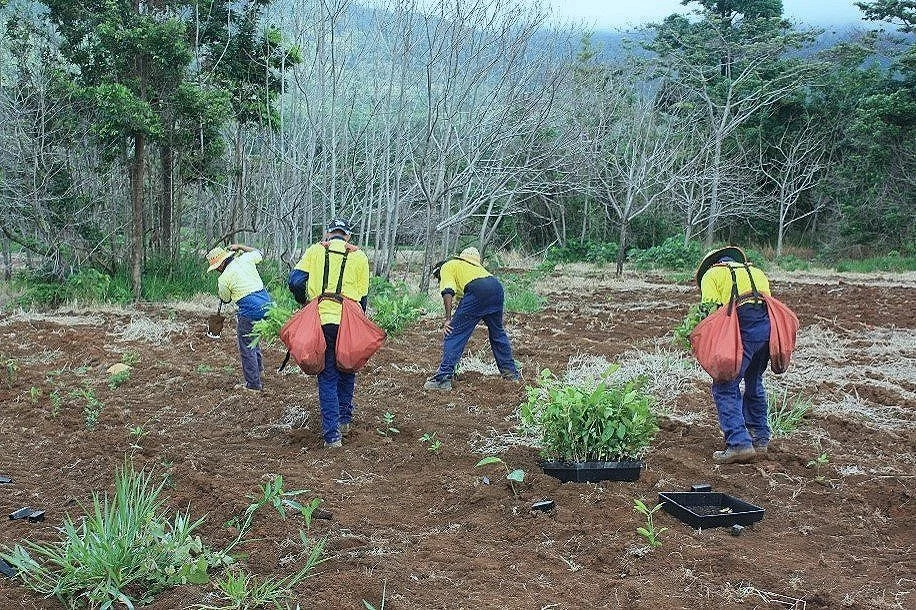
Large-scale reforestation means restoring cleared land by the hundreds of hectares rather than the dozens of trees. Rainforest Conservation Foundation has planted more than 160,000 trees in the Wet Tropics of Far North Queensland since 1996, invested more than $8.8 million in doing it, and returned 129 hectares of restored land to Queensland National Parks. This page sets out the scale of the problem, the part we have played so far in mitigating it, and where we are going.
The Size of the Problem
A two-year study by the Wet Tropics Management Authority found:
around 54,000 hectares across the Wet Tropics at critical risk
more than 30,000 hectares of that along waterways that drain to the Great Barrier Reef
14,400 hectares of poor agricultural country
9,600 hectares on slopes steeper than 20 degrees
All the reforestation organisations in the region combined replant in the order of 100 hectares a year. At that rate the 54,000 hectares at risk will never be restored. The problem is huge, and it needs fixing now.
What We Have Restored So Far
Trees planted since 1996: 160,000+
Invested in reforestation: $8.8 million+
Land under Nature Refuge Covenants: 18,000+ hectares
Returned to Queensland National Parks: 129 hectares across 31 properties
Pending transfer: 94 hectares across 13 properties
Seedlings propagated each year: 20,000+ at Benella Rainforest Reserve
Returning land to National Parks matters more than it sounds. It means the restored forest is protected in perpetuity by the state, not by us, and not by whoever owns the title next. It also reflects how closely RCF works with the Wet Tropics Management Authority and the Queensland Government.
Our Results at George Mansford Reserve
George Mansford Reserve was the first project to bring broadacre agricultural land preparation to rainforest reforestation. It produced a 103% tree survival rate, canopy closure in 18 months against a typical 36 or more, and maintenance costs three to four times lower than standard practice.
A survival rate above 100% sounds like an error. It is not. More trees were standing at the count than were planted, because natural propagation added seedlings of its own once conditions were right. A site that starts recruiting its own trees is the clearest sign that the restoration has taken.
Early canopy closure is what makes the difference. Once the canopy closes, the ground is shaded, weeds stop competing and the maintenance years end sooner. It is the line between a plantation that needs ongoing management and a forest that looks after itself. Most of that result comes from preparing the ground properly before a single tree goes in, which is where three decades of local knowledge lives.
We Share the Method
RCF makes its seed collection and planting method available to like-minded conservation organisations on request.
That is deliberate. The problem is bigger than any one organisation. Restoring the Wet Tropics needs every reforestation group in the region working together, and at 100 hectares a year across the whole sector it will not be solved any other way.
Who Does the Work
Seed is collected by hand from parent trees near each site, often kilometres into the forest, because provenance matters: a rainforest replanted from a catalogue is not a rainforest. The seedlings come from Benella Rainforest Reserve, our headquarters in the Daintree, and from specialist native nurseries in the region.
Among the people behind the method we have devised is Peter Radke, the botanist and rainforest expert who founded Yuruga Nursery in 1985 and built it to propagate around 1.25 million plants a month. The nursery knowledge that underpins RCF's survival rates is not theoretical.
Where We Are Going
The goal is 100 hectares at a time, and 1,000 hectares over ten years.
That is ten times the current output of the entire regional sector, and it is why a scalable method is so important. Reaching it needs:
enhanced nursery capacity
faster ways to grow rainforest, which is what our drone-assisted work is for
Independent Support
The Wet Tropics Management Authority, the Australian Government statutory authority responsible for the World Heritage Area, wrote to RCF in September 2024:
"The Authority is pleased to support the Rainforest Conservation Foundation's endeavour to trial new and innovative restoration methods, to increase the scale of reforestation that will bolster the resilience and vitality of Wet Tropics landscapes and Wildlife in the face of climate change."
-

Drone Reforestation
How sowing pioneer species from the air could help us restore more ground in less time.
-
How We Reforest Land
The reforestation projects we have completed across the Daintree region, and how the work is done.
-

Partnerships for Landowners
Have cleared land in the Wet Tropics? We reforest it at no cost to you, and the land stays yours.
Frequently asked questions
Last updated: 16 November 2026
-
RCF has planted more than 160,000 trees since 1996 and returned 129 hectares of restored land to Queensland National Parks across 31 properties, with a further 94 hectares across 13 properties pending transfer. RCF has also been instrumental in ensuring that more than 18,000 hectares in and around the Daintree are now protected under Nature Refuge Covenants.
-
Scale changes the method. Planting a few hundred trees is a matter of labour. Restoring hundreds of hectares depends on land access, nursery capacity and funding, and on getting survival rates high enough that the forest closes over quickly and stops needing help.
-
Canopy closure typically takes around 36 months. At our George Mansford Reserve project, careful preparation brought that down to 18. A fully restored rainforest, with the mix of species and layers of a mature forest, is measured in decades rather than years.
-
It makes the protection permanent and independent of us. Once the land is transferred, it is protected by the state rather than by an organisation that has to keep existing and keep funding it. For a donor, it is the difference between a result and a commitment.
-
Donations, grants and corporate partnerships. RCF has invested more than $8.8 million in reforestation to date. Grants are the mainstay, and regular donations are what let us commit to multi-year projects rather than single planting seasons.
-
Benella Rainforest Reserve in the Daintree is our conservation headquarters and welcomes visitors. RCF runs a hands-on education program for students there, including school groups through our student engagement program. Get in touch if you would like to see restored country rather than read about it.